


相关文章推荐
阳光的充值卡  ·  陆生入健保还要等多久? - 人民日报·  4 月前    · 
快乐的香菜  ·  聊聊ICU ...·  1 年前    · 
快乐的香菜  ·  利用支持向量机预测重症监护室患者死亡风险的研究·  1 年前    · 
快乐的香菜  ·  隔夜西瓜吃进ICU?罪魁祸首竟是它!·  1 年前    · 
小百科  ›  分布式报警系统| Hamilton Medical 哈美顿医疗公司
重症监护室 work 医疗
快乐的香菜
1 年前
Hamilton Medical 哈美顿医疗公司总部 Bonaduz
登录。
此字段为必填
请输入一个有效的电子邮件
此字段为必填
无效用户名或密码
  • 我想要创建一个 Hamilton Medical 哈美顿医疗公司帐户
  • Partner‑net(仅限 Hamilton Medical 哈美顿医疗公司经销商和员工)
  • 忘记密码了吗?

34ab616e-3e9c-4ac2-bd35-7d2c89f42ad1
34ab616e-3e9c-4ac2-bd35-7d2c89f42ad1_website_zh
页
page
/Public/Products/Digital-Solutions/Distributed-Alarm-System
public
Customer-service

我们激发了您的兴趣? 取得联系

我们很高兴为您服务,并将尽快给您回复;

Question

需要帮助或有反馈意见? 我们的热线已开通

如果您需要支持,我们的全球团队和当地专家随时待命。请随时分享反馈意见,这有助于我们的成长。

服务热线
留下产品反馈意见
Ressources

需要文件吗? 在资源中心查找答案

访问与我们所有产品相关的所有文件、视频、文章、在线学习模块和额外的资源。

Hamilton Medical 哈美顿医疗公司标志 Hamilton Logo
  • 产品
  • 服务
  • 学院
  • 资源
  • 电子产品目录
  • 关于我们
  • 职位
  • 新闻
  • 登录
  • ZH

数字解决方案
分享

分布式报警系统。

在安静的 ICU

护士由于报警捂住双耳

斗争是真实的。 ICU 里的报警疲劳

每个 ICU 病人的平均报警次数可超过每天 700 次。预计 80% 至 95% 上述报警在临床上不重要 ( Cvach M. Monitor alarm fatigue: an integrative review.Biomed Instrum Technol.2012;46(4):268-277. doi:10.2345/0899-8205-46.4.268 1 ​, McBride DL, LeVasseur SA.Personal Communication Device Use by Nurses Providing In-Patient Care: Survey of Prevalence, Patterns, and Distraction Potential.JMIR Hum Factors.2017;4(2):e10.Published 2017 Apr 13. doi:10.2196/humanfactors.5110 2 ​)。

处理这么多无需干预的报警可能导致护理人员报警疲劳 ( https://www.ecri.org/Resources/In_the_News/Sound_the_Alarm(PSQH).pdf A ​)。这会增加病人伤害以及病人和医务人员不满意的风险 ( https://www.ecri.org/Resources/In_the_News/Sound_the_Alarm(PSQH).pdf A ​, https://www.ncbi.nlm.nih.gov/books/NBK555522/ B ​)。

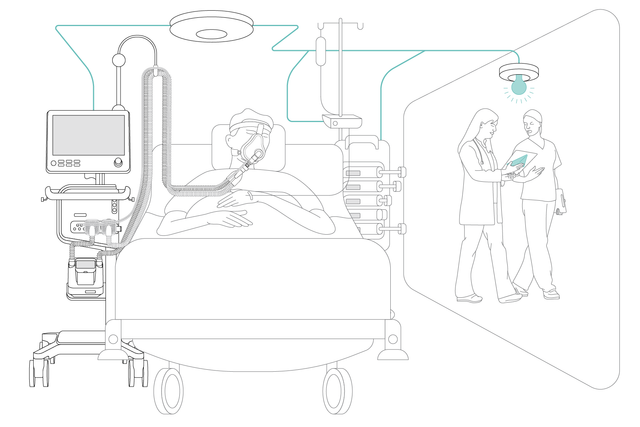
图:正在通气的病人。报警显示在护士站。

音频关闭! 静音

当配置为分布式报警系统 (DAS) 的一个组成部分时 ( 仅适用于 HAMILTON-C6/G5/S1 C ​),呼吸机的声音报警可以暂停无限时间。此功能被称为全部音频关闭。

全部音频关闭启用时,将呼吸机报警传输至 DAS 中的其他设备,同时呼吸机上的可视报警指示灯保持激活状态。

HAMILTON-C6_ASCOM-Silent-ICU_youtube

让人安心从容。 使用 Ascom 进行报警管理

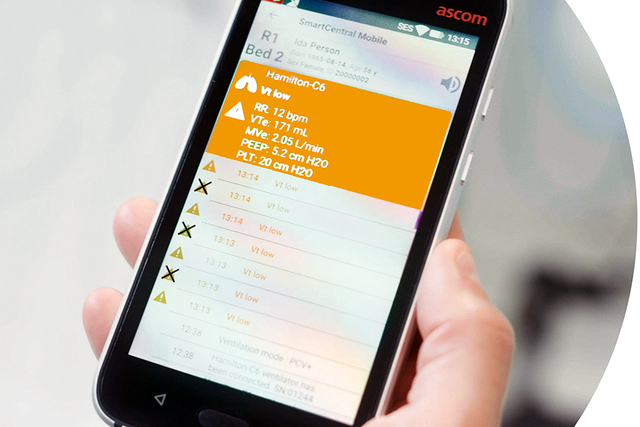
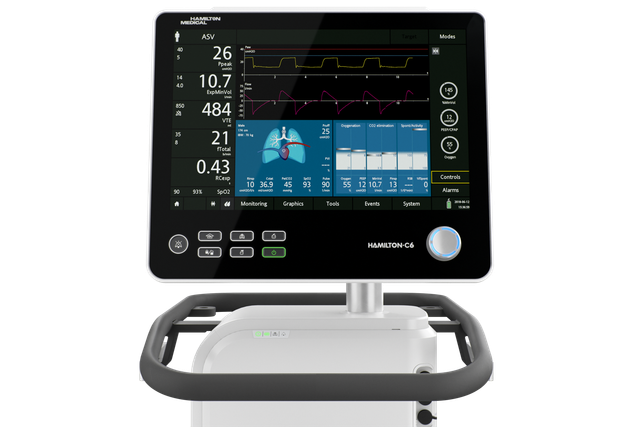
Ascom Digistat 7.2 与 HAMILTON‑C6 和 HAMILTON‑G5/S1 呼吸机配合使用以提供分布式报警系统 (DAS)。Ascom 报警管理系统接收 HAMILTON‑G5/S1 和 HAMILTON‑C6 所有报警的全权委托,确保完全可靠的报警管理。

报警通知可发送至护理人员的手机上,或显示在桌面电脑或控制面板上。

ASCOM_Silent-ICU

可用性

分布式报警系统集成可作为 HAMILTON-C6 和 HAMILTON-G5/S1 呼吸机的一个选配件提供。

HAMILTON-C6

HAMILTON-C6

脚注

  • A. https://www.ecri.org/Resources/In_the_News/Sound_the_Alarm(PSQH).pdf
  • B. https://www.ncbi.nlm.nih.gov/books/NBK555522/
  • C. 仅适用于 HAMILTON-C6/G5/S1

参考文献

  1. 1. Cvach M. Monitor alarm fatigue: an integrative review. Biomed Instrum Technol. 2012;46(4):268-277. doi:10.2345/0899-8205-46.4.268
  2. 2. McBride DL, LeVasseur SA. Personal Communication Device Use by Nurses Providing In-Patient Care: Survey of Prevalence, Patterns, and Distraction Potential. JMIR Hum Factors. 2017;4(2):e10. Published 2017 Apr 13. doi:10.2196/humanfactors.5110

Monitor alarm fatigue: an integrative review.

Cvach M. Monitor alarm fatigue: an integrative review. Biomed Instrum Technol. 2012;46(4):268-277. doi:10.2345/0899-8205-46.4.268

  • Link to article
Alarm fatigue is a national problem and the number one medical device technology hazard in 2012. The problem of alarm desensitization is multifaceted and related to a high false alarm rate, poor positive predictive value, lack of alarm standardization, and the number of alarming medical devices in hospitals today. This integrative review synthesizes research and non-research findings published between 1/1/2000 and 10/1/2011 using The Johns Hopkins Nursing Evidence-Based Practice model. Seventy-two articles were included. Research evidence was organized into five main themes: excessive alarms and effects on staff; nurse's response to alarms; alarm sounds and audibility; technology to reduce false alarms; and alarm notification systems. Non-research evidence was divided into two main themes: strategies to reduce alarm desensitization, and alarm priority and notification systems. Evidence-based practice recommendations and gaps in research are summarized.

Personal Communication Device Use by Nurses Providing In-Patient Care: Survey of Prevalence, Patterns, and Distraction Potential.

McBride DL, LeVasseur SA. Personal Communication Device Use by Nurses Providing In-Patient Care: Survey of Prevalence, Patterns, and Distraction Potential. JMIR Hum Factors. 2017;4(2):e10. Published 2017 Apr 13. doi:10.2196/humanfactors.5110

  • Link to article


BACKGROUND

Coincident with the proliferation of employer-provided mobile communication devices, personal communication devices, including basic and enhanced mobile phones (smartphones) and tablet computers that are owned by the user, have become ubiquitous among registered nurses working in hospitals. While there are numerous benefits of personal communication device use by nurses at work, little is known about the impact of these devices on in-patient care.

OBJECTIVE

Our aim was to examine how hospital-registered nurses use their personal communication devices while doing both work-related and non‒work-related activities and to assess the impact of these devices on in-patient care.

METHODS

A previously validated survey was emailed to 14,797 members of two national nursing organizations. Participants were asked about personal communication device use and their opinions about the impact of these devices on their own and their colleagues' work.

RESULTS

Of the 1268 respondents (8.57% response rate), only 5.65% (70/1237) never used their personal communication device at work (excluding lunch and breaks). Respondents self-reported using their personal communication devices at work for work-related activities including checking or sending text messages or emails to health care team members (29.02%, 363/1251), as a calculator (25.34%, 316/1247), and to access work-related medical information (20.13%, 251/1247). Fewer nurses reported using their devices for non‒work-related activities including checking or sending text messages or emails to friends and family (18.75%, 235/1253), shopping (5.14%, 64/1244), or playing games (2.73%, 34/1249). A minority of respondents believe that their personal device use at work had a positive effect on their work including reducing stress (29.88%, 369/1235), benefiting patient care (28.74%, 357/1242), improving coordination of patient care among the health care team (25.34%, 315/1243), or increasing unit teamwork (17.70%, 220/1243). A majority (69.06%, 848/1228) of respondents believe that on average personal communication devices have a more negative than positive impact on patient care and 39.07% (481/1231) reported that personal communication devices were always or often a distraction while working. Respondents acknowledged their own device use negatively affected their work performance (7.56%, 94/1243), or caused them to miss important clinical information (3.83%, 47/1225) or make a medical error (0.90%, 11/1218). Respondents reported witnessing another nurse's use of devices negatively affect their work performance (69.41%, 860/1239), or cause them to miss important clinical information (30.61%, 378/1235) or make a medical error (12.51%, 155/1239). Younger respondents reported greater device use while at work than older respondents and generally had more positive opinions about the impact of personal communication devices on their work.

CONCLUSIONS

The majority of registered nurses believe that the use of personal communication devices on hospital units raises significant safety issues. The high rate of respondents who saw colleagues distracted by their devices compared to the rate who acknowledged their own distraction may be an indication that nurses are unaware of their own attention deficits while using their devices. There were clear generational differences in personal communication device use at work and opinions about the impact of these devices on patient care. Professional codes of conduct for personal communication device use by hospital nurses need to be developed that maximize the benefits of personal communication device use, while reducing the potential for distraction and adverse outcomes.
法律信息 隐私和 cookie 政策 版本说明 一般条款和条件 专利 商标

此处所示产品并非向一般公众出售。此处所提供的信息仅适用于医疗专业人士。务必阅读标签并遵循产品的使用说明。产品规格如有变更、恕不另行通知。某些功能是选配件。并非所有产品和功能都适用于所有市场。所有图像仅作图示说明之用,可能未准确展示产品或其用途。

Hamilton Logo © Hamilton Medical 哈美顿医疗公司。 版权所有。
 
推荐文章
阳光的充值卡  ·  陆生入健保还要等多久? - 人民日报
4 月前
快乐的香菜  ·  聊聊ICU 病房限制家属探视的为什么与该不该- 少数派
1 年前
快乐的香菜  ·  利用支持向量机预测重症监护室患者死亡风险的研究
1 年前
快乐的香菜  ·  隔夜西瓜吃进ICU?罪魁祸首竟是它!
1 年前
今天看啥   ·   Py中国   ·   codingpro   ·   小百科   ·   link之家   ·   卧龙AI搜索
删除内容请联系邮箱 2879853325@qq.com
小百科 - 百科知识指南
© 2024 ~ 沪ICP备11025650号