
|
|


语言学中的X-Bar Theory是指什么?
RT
关注者
49
被浏览
55,757
3 个回答

X-bar 是一个syntactical framework,用于描述phrase structure,也就是一种语言的树状图,基本结构是这样的:
X''-(Specifier)X'---Specifier可有可无
X'-[(Adjunct)X']---这一层可有可无
X'-(Complement)X---Complement可有可无,如果有了一般不被挪动
以上的Specifier,Adjunct和Complement分别在X'',X'和X的左边还是右边视这个语言的parameter来决定。
X-bar framework在parameter的控制下可以把所有语言都结构化,并不是只局限于英语的。也就是说在D-structure(深层结构)上所有语言的本质结构都是一样的,但由于parameter和一些其他(特别复杂)的各种movement和principle使得他们的S-Structure(表层结构)不一样,从而使得每种语言的语法和结构看上去都很不同。
举个栗子,这是包括了V-T movement的德语句子的X-bar framework(这是我的某次作业,可能不完全正确,但差不多就是这个意思哈):

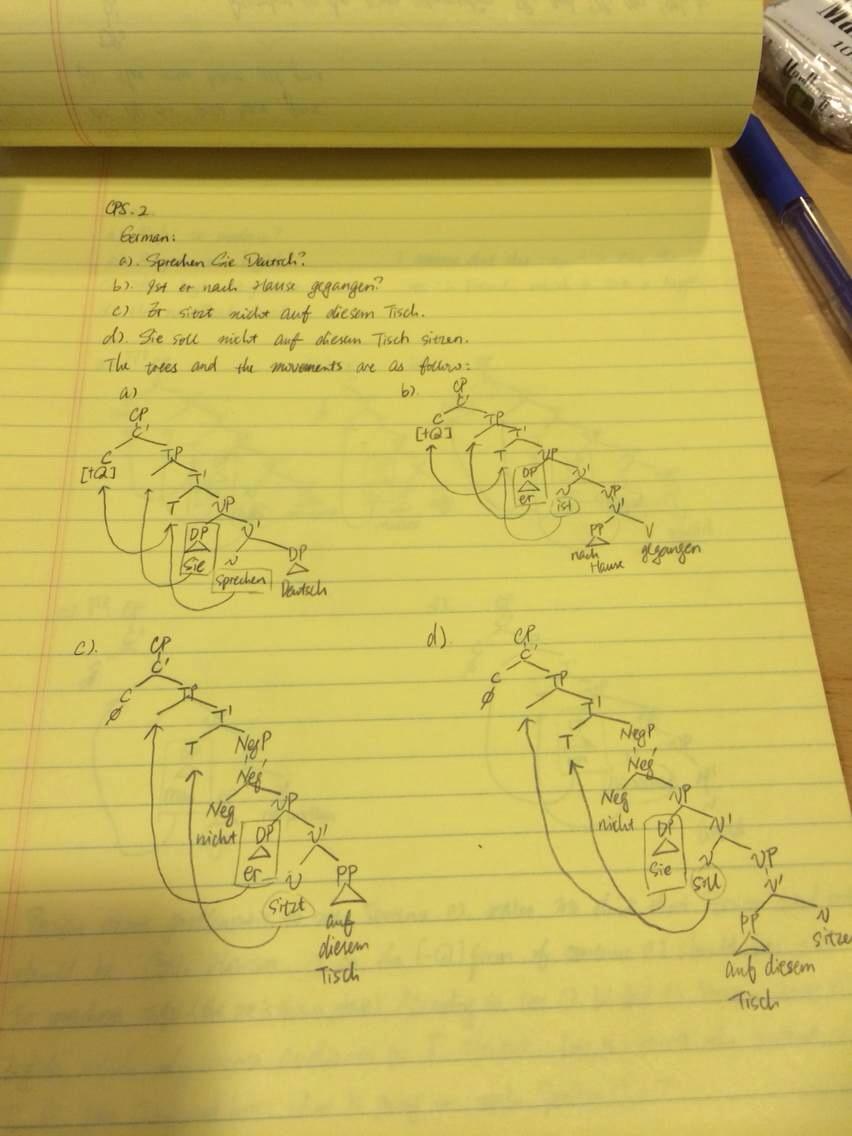

X-bar theory is one of the sub syntactic theories that Noam Chomsky proposed in his work <lecture on government binding> that published in 1981 to account for cross linguistic variation. Most succinctly put, X-bar theory establishes hierarchical structure of any human language by projecting the spec and the head of a sentence to either left or right. It is recognized as a more scientific approach compare to the language specific parameters in the old syntactic model of transformational grammar. There are four types of language in terms of word order: SVO, SOV, VOS, OVS, and all of them can be analyzed under the scope of X-bar theory.
SVO: spec to the left, head to the left
SOV: spec to the left, head to the right
VOS: spec to the right, head to the left
OVS: spec to the right, head to the right
X-bar theory and move-alpha theory in the GB model has now been replaced by the more advanced theories of move and merge in Chomsky's new MT (minimalist theory) model.